

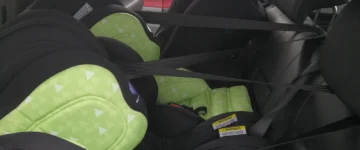
What’s the best combination when fitting three child restraints across the back seat, and what factors determine success? A mobile car seat fitting service can help.
Fitting three child restraints across the back seat is best left to an accredited ACRI child restraint fitter. Driving a large SUV is no guarantee you’ll manage it — many smaller cars are actually better suited to three-across than many SUVs.
📋 Key considerations for fitting three child restraints
The extended harnessing child restraint was introduced in the 2014 Australian Standard update. This seat type allows a child to stay forward-facing in a full 6-point harness until they’re 8 years of age, or have passed the exit marker. It can be used once your child has transitioned from rear-facing to forward-facing.
🪑 Fitting 3 across with booster seats
A booster seat can only be used once a child has reached 4 years of age and attained a minimum height, indicated by the shoulder height markers, so the seat belt sash doesn’t cross your child’s neck.
↩️ Extended rear-facing
An extended rear-facing baby car seat allows families to keep children rear-facing for up to 30 months. The best extended-harnessing seats come from Britax, Babylove, or Infa Secure — these go the full 30 months and can be identified by 3 shoulder height markers stacked on the inside of the seat.
Extended rear-facing seats also tend to work best for three-across fitting, since the widest part of the seat is usually at the top.
🍼 Baby capsules
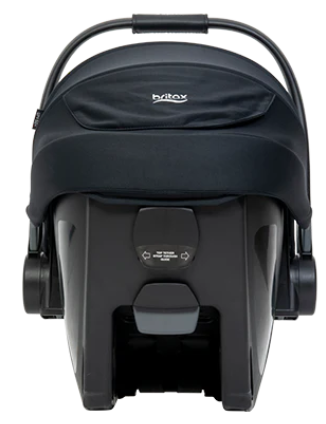
Baby capsules can be very wide, making three-across fitting difficult. Most capsules are 46–48cm wide, and you need to make sure the handle doesn’t interfere with the next seat.
Thankfully, the B-Pod is only 43cm wide, making it possible to fit 3 capsules across the back seat.
📏 Research your child restraints — measure first
Start thinking in terms of measurements, not guesswork:
How wide is your back seat, edge to edge?
Do you have deep bucket seats? If so, measure the width of the seat wings and subtract 2× that width from the total back seat width.
Measure your current car seats and see how much room you have to spare. Most back seats are around 132–136cm wide — the Holden VF Commodore family wagon is one of the widest at around 151cm, capable of fitting 3× Isofix restraints across 3 Isofix positions.
Next: measure the footprint and the widest part of each child restraint — the widest part is what actually dictates which combination will fit.
The footprint also indicates how much room you have to get your hand in to connect the seat belt buckle — very important for booster seats. If your child can’t easily plug in the buckle themselves, there’s a good chance they simply won’t bother.
In many cases you’ll need to place the restraints loosely into the car first, just to get a feel for which combinations actually work.
⚠️ Using booster seats
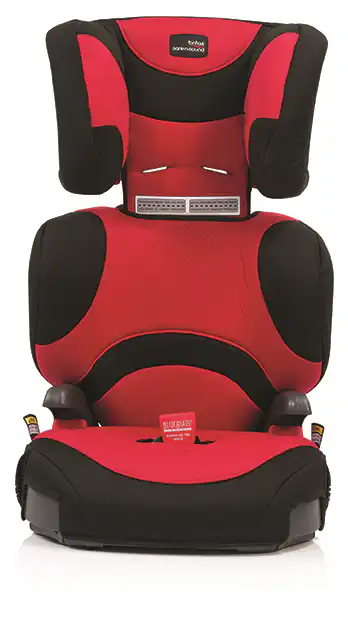
Booster seats aren’t recommended when fitting three car seats across the back seat. They’re generally too wide, the fitment becomes very tight, and it’s harder to buckle up. There’s also a high chance of accidentally unclipping the seat belt of the child restraint next to it.
⚠️ Using Isofix car seats
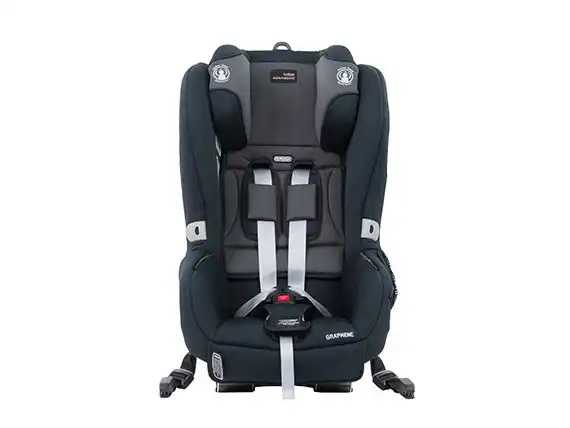
Isofix isn’t recommended when fitting three seats across, either. Most cars only have two pairs of Isofix attachment points, which position restraints toward the middle of the seat — and the centre seat won’t even fit an adult or teenager when Isofix is in use there.
The Isofix system can only be used on seats designed up to 4 years of age.
“The VF Commodore is one of the widest family cars on the market and will fit three Isofix child restraints in the back seat.”
✅ Trial and error — seats that work well
Aim for restraints around 44cm at their widest point, to maximise your chances of success. Some of the better car seats to consider:
The “Safe n Sound Unity” capsule from the original list has been removed here since the Unity line is now retired and replaced by the B-Pod Lite, already listed above.
🔧 Installation order
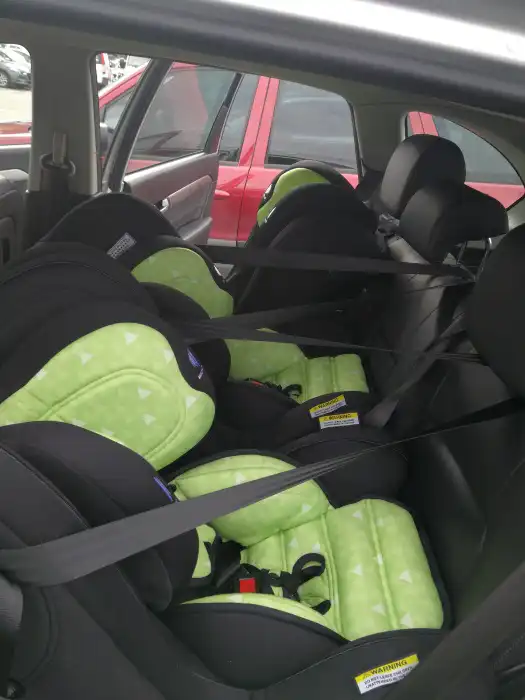
The installation order determines whether it’s actually possible to fit — and uninstall — all three child restraints.
Some articles suggest installing the centre position first — but in most cases this makes it harder to install the seats either side, since their buckles sit right next to the centre buckle.
It’s better to start with the rear-facing child restraint first. If there’s no rear-facing restraint, install the seat on the side with a single buckle first instead.
⚠️ A word of caution
When installing booster seats (Type E) or forward-facing/booster combo restraints (Type B/E), make sure your child can actually reach the seat belt buckle. If it’s too hard to reach, they may not clip themselves in at all — an extended harnessing car seat is a good way around this problem. A mobile car seat installation professional can help with fitting three restraints across.
Contact mobile baby car seat fitting, or call 0420 516 587, when you need to fit three baby car seats in the second row.
❓ Frequently asked questions
Can any big SUV fit three car seats across? +
Should I use booster seats when fitting three across? +
Should I use Isofix when fitting three across? +
Which car seats work best for fitting three across? +
What order should I install three seats in? +
What’s the trick to buckling seats packed tightly together? +
Fitting Three Child Restraints Across
Need help working out the right combination for your car? Book a fitting for expert, independent advice.