


Your baby is always safest in a rear-facing car seat, for as long as your child fits in a rear-facing child restraint or baby capsule. There are practical limits to keeping a child rear-facing, though — such as the height markers.
The height marker indicates the minimum torso length your child should reach before being turned around to forward-facing. Height markers must be measured at the shoulders.
📜 Child restraint standards
There are a number of different child restraints on the market, complying with different standards: the 2004 standard uses a weight and age-based system, the 2010 standard uses height markers, and the 2013 standard introduced the G-type seat and Isofix. Regardless of which standard your child restraint complies with, the most important thing for a rear-facing car seat is that your child is comfortable and not squashed — check that they still properly fit the inbuilt harness for rear-facing use.
⚖️ Legal age for rear-facing car seats
From 6 months of age, children can legally be turned around from rear-facing to forward-facing. However, the generally agreed minimum is that a child should stay rear-facing until they reach at least the first height marker — with many experts recommending you wait until they pass the upper shoulder height marker instead.
For a 2004-standard restraint (weight and age-based), there are no height markers — the sign your child has outgrown the restraint is when their shoulders pass the upper harness slot for rear-facing use.
🍼 Types of rear-facing child restraints
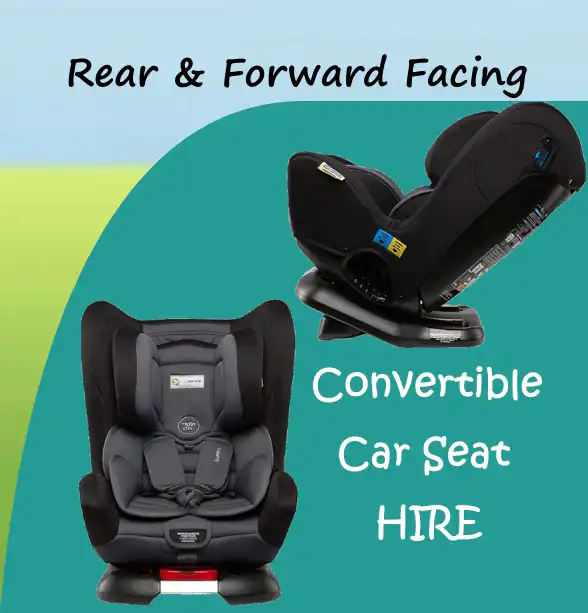
If you have a baby capsule, it’s recommended to move to a convertible child restraint in rear-facing mode next. There are a number of different rear-facing restraints, indicated by their child restraint type.
Small capsule, for 6–9 months — e.g. the Maxi Cosi Mico Plus.
For children up to 12 months old — e.g. the Britax B-Pod capsule.
Extended rear-facing car seat, for children up to 30 months old.
🔧 Turning the seat around yourself?
Many families feel more confident turning a rear-facing car seat to forward-facing themselves — mainly because forward-facing installation sits closer to your car’s own seat and is harder to move once installed. If you’re uncertain about your ability to fit the seat correctly in a forward-facing position, contact TravelSafe baby seat installation on 0420 516 587.
📚 References
• Transport WA
❓ Frequently asked questions
When should I turn my child from rear-facing to forward-facing? +
What’s the difference between A1, A2 and A4 rear-facing seats? +
Do older 2004-standard seats have height markers? +
Should I install a rear-facing-to-forward-facing seat myself? +
What are the different Australian child restraint standards? +
Where can I read the official rules myself? +
Baby Car Seat Fitting in Melbourne
Ready to turn your child forward-facing? Book a fitting for expert, independent advice.