
❓ Baby Car Seat FAQ
Here’s our baby car seat FAQ, where we try to answer the questions parents have but keep getting confusing answers to. We’ve also listed the individual state government pages where you can read more in-depth information about baby car seats and the law.
If you find any errors, please don’t hesitate to contact us so we can correct the information for other parents.
📅 Booking & Service
What is your service area? +
Can I install my baby car seat myself in Melbourne? +
Do I need a child car seat installation certificate? +
How long does the child seat installation take? +
What are your child restraint fitting costs? +
Are all child restraint fitters the same? +
🔧 Isofix & Standards
What is Isofix? +
What is an “approved child restraint”? +
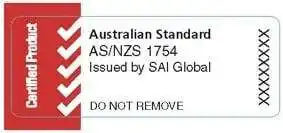
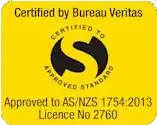
Approved child restraints comply with Australian Standard AS/NZS 1754 and must be correctly anchored using an approved anchorage system. All restraints sold in Australia must meet the strict requirements of AS/NZS 1754, covering materials, design, construction, performance, testing, and labelling — it’s illegal to sell a restraint that doesn’t comply. Restraints bought overseas won’t meet the Australian Standard, and it’s illegal to use them here. Restraints approved to the earlier E46 standard may still legally be used, but aren’t recommended, since they’re old and may have deteriorated to the point of being unsafe.
Look for these labels on a genuinely approved restraint:
Can I use my 10-year-old baby car seat? +
Can my child use an adult seat belt at 7 years of age? +
🚗 Seating Position Law
Can children ride in the front seat? +
In any vehicle with two or more rows of seats, the law requires: children under 4 must sit in the rear. Children aged 4 to 7 may sit in the front, but only if all rear seats are already occupied by children up to the same age.
Small car exception: if it’s genuinely impossible to fit a third restraint between two others, a child aged 4 to 7 can move to the front row, provided they’re correctly restrained in an age-appropriate restraint.
In a vehicle with only one row of seats, children may travel in that row provided they’re correctly restrained in a size-appropriate, approved restraint, fitted to the manufacturer’s instructions — including attaching the upper tether to an anchorage point (this excludes restraints like foam boosters that don’t have an upper tether).
Commercial vehicles with only one row (e.g. vans like the Toyota Hiace, or utes like the Ford Ranger) aren’t required to have anchorage points, though it may be possible to have one fitted. If your vehicle doesn’t have anchor points, contact RAA or ACRI to find your nearest anchorage installer.
Rear-facing restraints must never be used in a seating position fitted with an airbag. Child restraint manufacturers warn against this, and most vehicle manufacturers warn against placing children under 12 in airbag-fitted positions — since airbags are designed for adult safety, these warnings should be followed.
📜 State-by-State Child Restraint Laws
What are the laws regarding child restraints in my state? +
- Victoria — VicRoads website
- NSW — Transport for NSW website
- Tasmania — Transport Tasmania
- Queensland — Transport and Main Roads website
- South Australia — RAA website
- Western Australia — Road Safety Commission website
- Other resources — Department of Infrastructure (archived)
🪑 Restraint Types
What are shoulder height markers? +
Since AS1754:2010 was approved, shoulder height markers have been added to all child restraints, making it easier for parents and carers to tell if a restraint still suits their child, and when it’s time to move to the next type or mode (e.g. rear-facing to forward-facing).
Baby capsule or convertible car seat? +
Should the car seat installation be rock hard? +
Is an extended harnessing (Type G) seat safer? +
What is extended harnessing? The child stays in a 6-point harness until they reach a torso length of 51cm — much safer than a standard lap-sash belt, the same reason racing drivers use a 5- or 6-point harness. It was introduced because many parents were moving children into boosters prematurely: old enough (around 4) but not tall enough for the sash to sit correctly across the shoulder rather than near the neck.
Three criteria for a good extended harnessing seat:
- A hassle-free harness (no manual re-threading)
- Easy one-handed harness adjustment
- A good recline angle, to help prevent head flop while sleeping
Seats meeting this criteria include the Maxi Guard, Maxi Guard Pro (around $120 more, with thermo fabric), Infa Grandeur (also an A4 rear-facing restraint), and Infa Evolve.
In this fitter’s opinion, the Maxi Cosi Luna doesn’t meet this criteria and isn’t as good value as the alternatives above.
Compared to boosters: extended harnessing is safer overall. A booster needs the correct age and height first, while an extended harnessing seat can be used immediately once forward-facing, keeping the safety benefit of a 6-point harness throughout.